English · Dansk · Bahasa Melayu
Top 100 movies
Lecture: The 100 movies project. The goal is movies.txt with the titles numbered from 1) upwards. The code is empire_movies.py (parsing), movie.py (reverse and number) and movie_file.py (writing).
Step 1: choose the page
The assignment pins an Internet Archive snapshot of Empire's list, because live sites change. The screenshot shows the saved headings of the page.
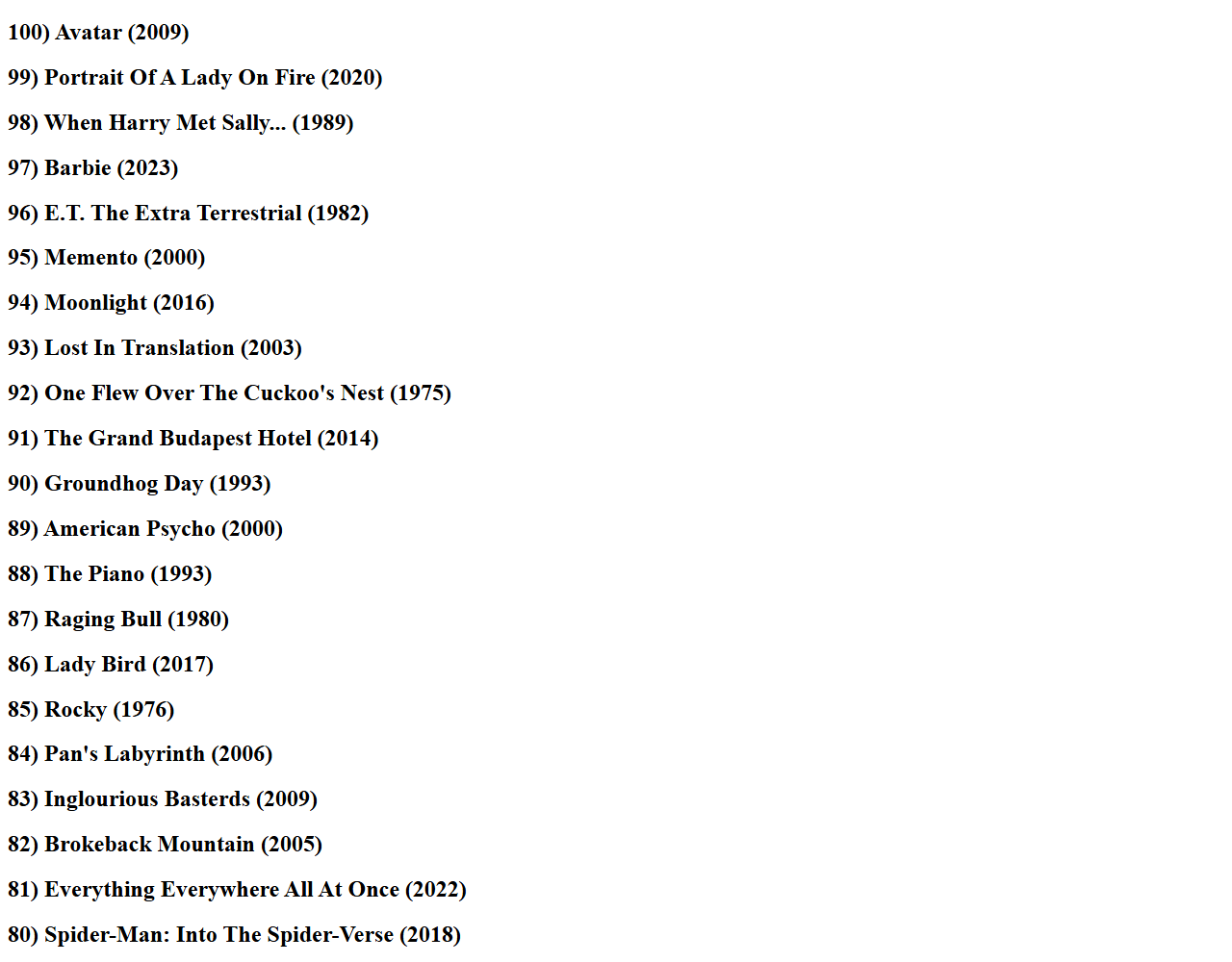
What we gained: a pinned snapshot makes a scraper repeatable.
Step 2: inspect the markup
The 2020 page has <h3 class="title">; the current page has <h2><strong> headings that start with a rank.
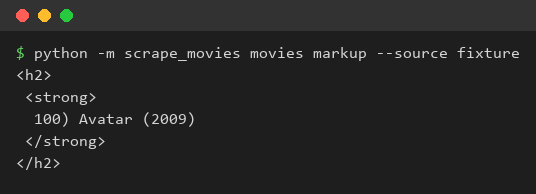
What we gained: when a site changes its markup, the parser must change with it, so we keep both layouts covered.
Step 3: titles in page order
select("h3.title") and a list comprehension over get_text(). The page counts down from 100.
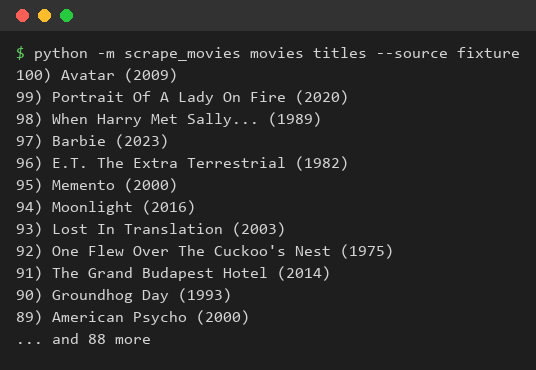
What we gained: a list comprehension is the compact way to collect text from many tags.
Step 4: reverse the list
titles[::-1] makes the list count up from 1.
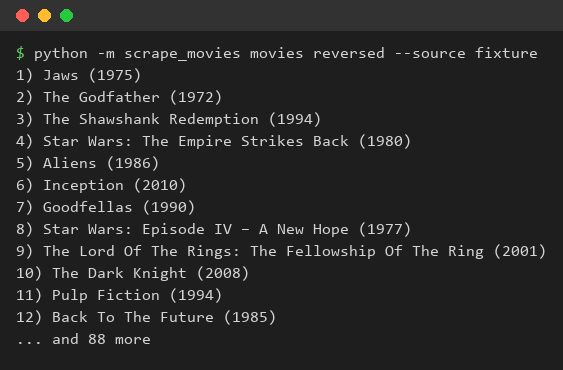
What we gained: slicing with a negative step reverses a list in one expression.
Step 5: write movies.txt
A with open(...) block writes one title per line.
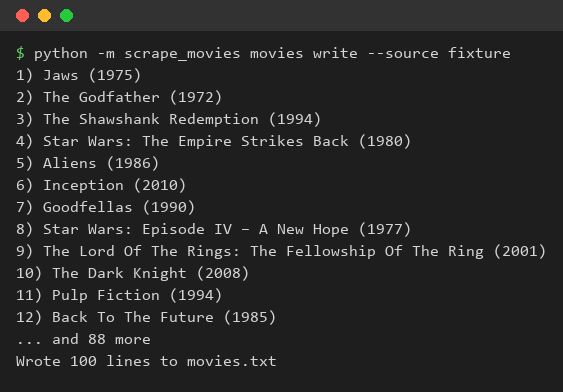
What we gained: the context manager closes the file for us, and the same run always gives the same file.
Step 6: the result
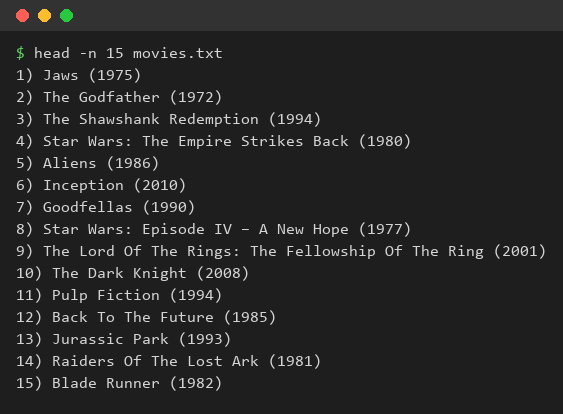
What we gained: a personal watch list from a website, ready to pick a film from at random.
Note on the data
movies.txt was produced from the current Empire list on 2026-10-28, so its ranking differs from the 2020 list in the lecture. The Internet Archive answered 429 Too Many Requests while we built this, so the snapshot layout is covered by a hand-written sample in the tests.
What we gained
We can scrape a ranked list, put it in the order we want and save it to a file.