
25 lines
1.3 KiB
Markdown
25 lines
1.3 KiB
Markdown
**English** · [Dansk](Scraping-Ethics-da) · [Bahasa Melayu](Scraping-Ethics-ms)
|
|
|
|
# Is web scraping legal and ethical?
|
|
|
|
Lecture: *The legal and ethical side of web scraping*. This is a summary in our own words, not legal advice.
|
|
|
|
## Step 1: read robots.txt first
|
|
|
|
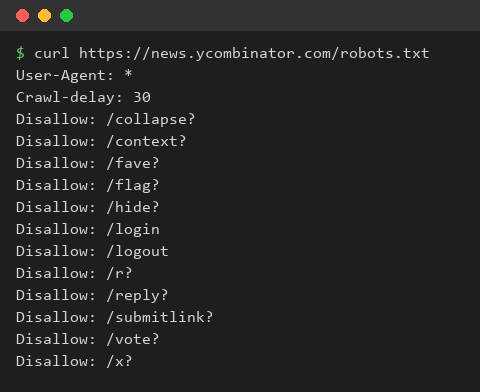
A site's `robots.txt` says what it allows. Hacker News disallows some paths and asks for a crawl delay of 30 seconds.
|
|
|
|
|
|
|
|
**What we gained:** we check the rules before we scrape, and we keep our requests rare: this project fetches one page per run.
|
|
|
|
## The rules we follow
|
|
|
|
- Public data that is not copyrighted is generally fine to read. The cases Genius v. Google and hiQ v. LinkedIn show that the line is not simple.
|
|
- Copyrighted content, such as videos or blog posts, must not be copied. Data behind a login is covered by the site's user agreement.
|
|
- Commercial use of scraped data can lead to costly disputes even when the scraping itself was allowed.
|
|
- Prefer an official API, respect `robots.txt`, send a `User-Agent` and do not send more than one request a minute.
|
|
|
|
## What we gained
|
|
|
|
Scraping is a technical skill with legal and ethical limits. Knowing the limits is part of doing it well.
|