 Tirsvad
375cc0b5f3
The game updates the price and owned text at once but the affordable
flag only at its next redraw, so a second purchase in the same visit
used a stale flag. Buying at most one product per visit cut the failed
purchases from about 40 percent to 1 of 49 and raised the CPS from 16.6
to 29 in the 300 second Docker run. README, screenshots and the wiki in
en, da and ms show the new result.

Task: MIL-006#1
Task: MIL-006#2
Task: MIL-006#3
Task: MIL-006#4
Task: MIL-006#5
1.5 KiB
1.5 KiB
Step 5: the five-minute run
🌐 English · Dansk · Bahasa Melayu
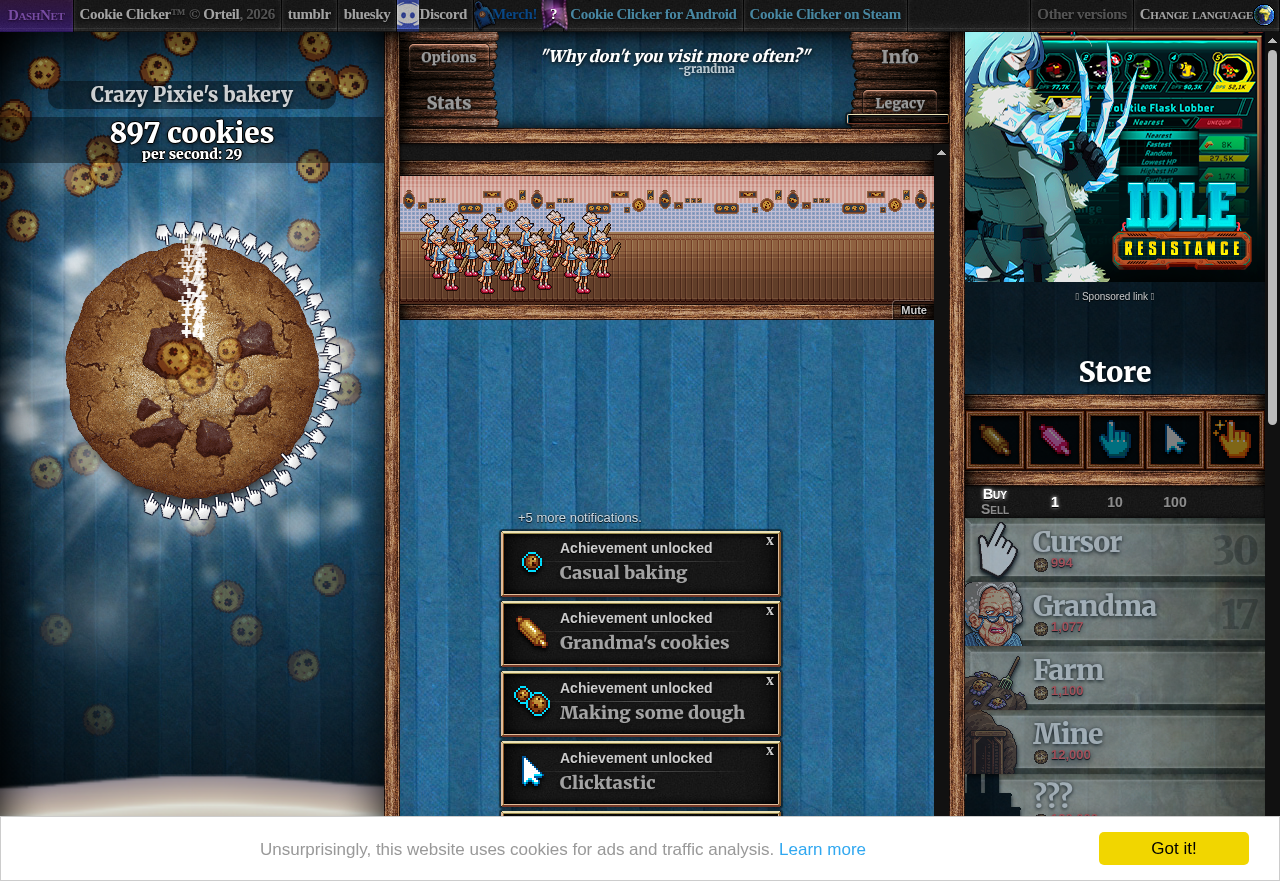
run_bot plays for 300 seconds in one loop: a burst of 20 clicks, then every second one visit to the store: upgrade crates first, then at most one product. At the end get_cps reads the cookies per second. The run in the screenshot reached 29 cookies per second with 29 cursors, 17 grandmas and 2 upgrades (the first release reached 16.6).
Screenshot
Function
while now - start < duration_seconds:
    click_cookie(game, CLICKS_PER_BURST)
    now = clock.monotonic()
    if now >= next_store_check:
        _buy_while_affordable(game)
        next_store_check = now + STORE_CHECK_INTERVAL_SECONDS
What we gained
- One loop, no threads. The earlier solution used two threads and an extra package. One loop is easier to read, needs no extra dependency and is easy to test.
- Inject the clock.
run_botreceives aClock, so a fake clock tests a 300 second run in milliseconds. - Run the GUI in Docker. Headless Chromium in a container never takes your mouse or keyboard, and the screenshots and the log come out as files.
- Where to go next. Buy by cost per cookie per second and click the golden cookie: each is a new function behind the same ports.